
Why Your Skin Changed After 40: Dryness, Thinning, and What Actually Helps
Quick answer: Menopause skin changes are tied to shifting hormones and slowing collagen production. Support usually works best from both directions: care that addresses the inside, such as hormone balance, and treatments that stimulate the skin itself.
“It’s like my face changed overnight.” We hear some version of this often. One season your skin behaves the way it always has, and the next it feels drier, looks less firm, and doesn’t bounce back the way it used to.
If that sounds familiar, you are not doing anything wrong. Menopause skin changes are real, they are common, and they have a clear biological reason behind them. Understanding what is happening beneath the surface is the first step toward caring for your skin in a way that actually helps.
What Causes Menopause Skin Changes
Estrogen plays a quiet but important role in skin health. It helps your skin hold on to moisture, supports its thickness, and encourages the production of collagen, the protein that gives skin its structure and firmness. During perimenopause and menopause, estrogen levels decline, and the skin feels the effects. The American Academy of Dermatology offers practical guidance on caring for your skin during menopause.
At the same time, collagen production naturally slows with age. The loss of collagen after 40 happens gradually, but when it combines with hormonal shifts, the change can feel sudden. Skin becomes thinner, holds less water, and repairs itself more slowly. None of this means your skin is failing. It means it needs a different kind of support than it did in your 20s and 30s.
Common Menopause Skin Changes People Notice
- Dryness: Perimenopause dry skin is one of the earliest and most common changes, even for people who have always had oily or combination skin.
- Crepey texture: Thinner skin can take on a fine, crinkled look, especially around the eyes, neck, and chest.
- Loss of firmness: Areas along the jawline and cheeks may soften as structural support declines.
- Dullness: Slower cell turnover can leave skin looking less radiant.
- Slower healing: Blemishes, scratches, and irritation may take longer to fade.
- More sensitivity: Skin may react to products, weather, or treatments that never bothered it before.
Inside-Out Support for Menopause Skin Changes
Because so many midlife skin changes start internally, the most effective plans don’t stop at the surface. Sleep, stress, nutrition, and hydration all influence how your skin looks and heals. Hormone balance matters too.
For clients whose symptoms and lab work point to a hormone imbalance, bioidentical hormone therapy may be part of a broader plan for feeling and functioning better during this transition. We want to be clear: hormone therapy does not reverse skin aging, and it is never a substitute for good skincare. What it can do, for the right person, is support the internal environment your skin depends on, while also helping with sleep, energy, and mood.
Treatments for Menopause Skin Changes
Alongside inside-out care, targeted treatments can encourage your skin to rebuild and repair itself. These are some of the options we use most often for mature skin.
Scarlet RF Microneedling
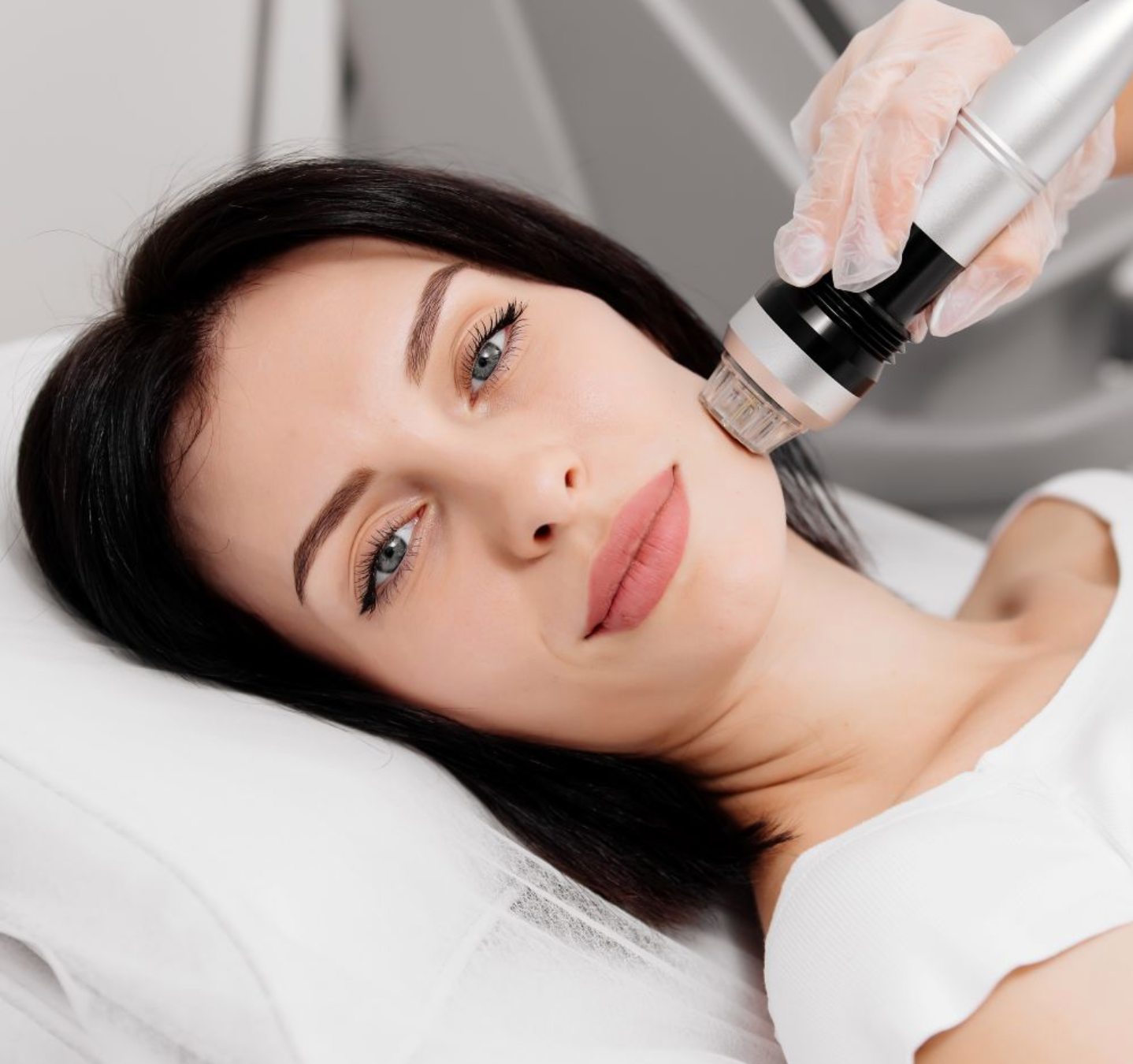
Scarlet RF combines ultra-fine microneedles with radiofrequency energy delivered beneath the surface. This stimulates collagen and elastin production, helping to improve texture, firmness, fine lines, and pores. Many clients choose Scarlet RF in Brooklyn and our other locations as part of skin tightening for women over 40 in NYC, because it delivers meaningful change with minimal downtime.
Sculptra
Sculptra is an injectable that works gradually. Rather than filling an area instantly, it encourages your body to produce its own collagen over time, restoring structural support in areas like the cheeks and temples. Results build slowly and look natural, which is why clients who come to us for Sculptra in Harlem often appreciate it for subtle, lasting improvement.
Red Light Therapy
Red and LED light therapy supports overall skin health and can be added to many facial treatments. It is gentle and pairs well with more active treatments.
Customized Facials
Our customized facials focus on hydration and barrier support, which are exactly what midlife skin tends to need most. Each facial is tailored to your skin’s current condition, so it can change as your skin changes. For many clients looking for the best facial for mature skin in NYC, a well-designed facial plan is the foundation everything else builds on.
Skin Tone Matters
Every treatment plan should account for your skin tone, not just your skin concerns. Deeper skin tones can respond differently to heat, light, and resurfacing, and the wrong settings or products can lead to irritation or pigmentation changes. At L’Elite MediSpa, inclusive care is part of how we work. We are experienced in wrinkle treatment for darker skin tones and choose techniques and settings that are safe and effective for your skin.
Building a Plan for Menopause Skin Changes
There is no single treatment that solves all menopause skin changes, and no one-size-fits-all routine. The most effective plans layer a few approaches thoughtfully. That might mean pairing a collagen-stimulating treatment with regular facials, adding inside-out support where it is needed, and adjusting your home routine to protect your skin barrier.
Timing matters too. Collagen-building treatments work gradually, so results build over weeks and months rather than overnight. Maintenance helps protect what you have built. We focus on healthy aging, which means supporting your skin so it looks and feels its best at every stage, not chasing a version of yourself from twenty years ago.
Why November Is a Smart Time to Start
If you are hoping to feel more confident in your skin for the holidays and the new year, starting now gives treatments time to work. Because collagen builds gradually, beginning a plan in November means you can start seeing progress by the new year, with skin that feels smoother, firmer, and more comfortable.
FAQs About Menopause Skin Changes
Can hormone therapy improve my skin?
Hormone therapy may support skin hydration and overall skin health for some people, but it is not a skin treatment and does not reverse aging. We consider it as part of your whole-person health plan, based on your symptoms and lab work.
What’s the difference between Scarlet RF and Sculptra?
Scarlet RF works on the skin itself, improving texture, tone, and firmness through microneedling and radiofrequency. Sculptra is an injectable that rebuilds structural support beneath the skin over time. Many clients benefit from one or both, depending on their goals.
How many sessions do I need?
It depends on the treatment and your goals. Collagen-stimulating treatments like Scarlet RF and Sculptra are usually done as a series, with maintenance afterward. Your provider will recommend a schedule during your consultation.
Is there downtime?
Downtime is generally minimal. After Scarlet RF, mild redness or sensitivity for a short time is common. Sculptra may cause temporary swelling or tenderness at injection sites. Facials and red light therapy usually involve no downtime at all.
Are these safe for darker skin tones?
Yes, when performed by an experienced provider who adjusts the approach for your skin. We tailor every treatment to your skin tone and history to keep it safe and effective.
Your Skin, Supported From the Inside Out
Skin changes in midlife are real, and so are your options. Schedule your personalized consultation at L’Elite MediSpa and let’s build a plan that supports your skin from the inside out.